
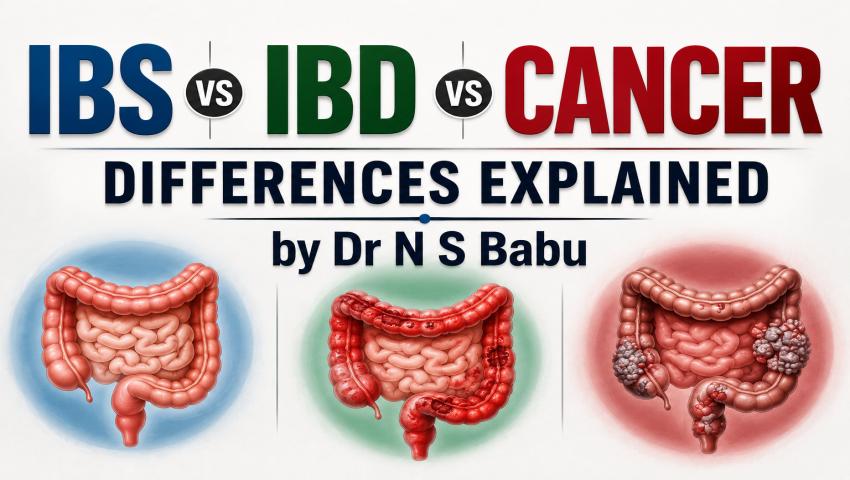
Digestive problems are becoming very common in India. Many people suffer from bloating, stomach pain, constipation, diarrhoea, gas, and changes in bowel habits. Most people ignore these symptoms in the beginning and think they are caused by food or stress. But sometimes, these symptoms may point towards a serious digestive disease.
Many patients get confused between IBS, IBD, and colorectal cancer because the symptoms can look similar in the early stages. Understanding the difference between IBS and IBD is important because the treatment and complications are very different.
People searching for IBS vs IBD or IBS vs Colon Cancer symptoms often struggle to know when they should consult a specialist. Early diagnosis can help prevent complications and improve treatment success.
Dr. N. Subrahmaneswara Babu, with more than 18 years of experience, provides expert care for digestive disorders, inflammatory bowel disease, and colorectal cancer. Patients looking for advanced IBS treatment in Hyderabad and gastrointestinal care often visit Hills Gastro and Onco Care for accurate diagnosis and modern treatment.
What is IBS (Irritable Bowel Syndrome)?
IBS stands for Irritable Bowel Syndrome. It is a common digestive condition that affects how the large intestine works. IBS does not cause ulcers, inflammation, or permanent bowel damage, but it can cause repeated stomach discomfort and affect daily life. People with IBS may experience bloating, gas, abdominal pain, constipation, diarrhoea, or frequent changes in bowel habits.
Symptoms often increase after eating certain foods, during stress, or due to poor lifestyle habits. IBS is more common in young adults, people under stress, and those with irregular eating or sleeping patterns. Although IBS is not considered dangerous, long term symptoms should not be ignored because they can affect digestion, sleep, work, and overall quality of life.
What is IBD (Inflammatory Bowel Disease)?
The full form of IBD is Inflammatory Bowel Disease. Many people confuse IBS and IBD because both affect the digestive system, but IBD is a more serious condition. It causes chronic inflammation inside the digestive tract and can damage the intestine over time if not treated properly.
The two main types of IBD are Crohn’s Disease and Ulcerative Colitis. Common symptoms include severe stomach pain, persistent diarrhoea, blood in stool, weight loss, fatigue, and fever.
One major difference between IBS and IBD is that IBD causes visible inflammation, ulcers, and bowel damage. In some patients, long term untreated IBD may also increase the risk of colorectal cancer. Early diagnosis and proper treatment are important to control symptoms and prevent complications.
What is Gastrointestinal or Colon Cancer?
Gastrointestinal cancer affects organs of the digestive system such as the stomach, colon, rectum, and intestine. Colon cancer, also called bowel cancer or colorectal cancer, develops in the large intestine or rectum.
In the early stage, symptoms of colorectal cancer may look similar to IBS or IBD. Common warning signs include blood in stool, unexplained weight loss, stomach pain, weakness, loss of appetite, and changes in bowel habits.
People above 45 years, smokers, obese individuals, and patients with chronic IBD have a higher risk of developing bowel cancer. Early diagnosis and treatment are important for better recovery and long term health.
IBS vs IBD vs Cancer Key Differences:
Many patients struggle to understand IBS vs IBD because all three conditions affect the digestive system and may show similar symptoms in the beginning. However, IBS, IBD, and colorectal cancer are very different conditions.
Understanding the difference between IBS and IBD is important because the treatment and complications are completely different. Knowing IBS vs Colon Cancer symptoms can also help patients seek early medical care and avoid delays in diagnosis.
When Should You See a Gastroenterologist?
Digestive symptoms should never be ignored if they continue for a long time.
You should consult a gastroenterologist if you experience:
- Blood in stool : Blood in stool may be a sign of piles, IBD, infection, or colorectal cancer and should always be medically evaluated.
- Severe stomach pain : Continuous or severe abdominal pain may indicate bowel inflammation, infection, or another serious digestive condition.
- Sudden weight loss : Unexplained weight loss without dieting can be linked to digestive diseases, poor nutrient absorption, or cancer.
- Long term constipation or diarrhoea : Persistent bowel problems may be associated with IBS, IBD, bowel infection, or colorectal disorders.
- Persistent bloating : Frequent bloating and gas that do not improve may point towards digestive imbalance or bowel disease.
Early medical consultation can help identify serious diseases before complications develop.
Patients looking for the Best gastroenterologist in Hyderabad or an experienced Colorectal surgeon in Hyderabad should seek expert evaluation for accurate diagnosis.
How Are IBS IBD and Colon Cancer Diagnosed?
1. Irritable Bowel Syndrome (IBS):
IBS is a functional gut disorder where the intestine looks normal but works abnormally.
How it is Diagnosed:
- Based on symptoms (Rome IV criteria)
- Abdominal pain with change in stool frequency or form
- Diagnosis of exclusion (no other disease found)
- Blood and stool tests done only to rule out other causes
- No single confirmatory test
2. Inflammatory Bowel Disease (IBD):
IBD is an autoimmune disease causing chronic inflammation and damage in the intestines.
How it is Diagnosed?
- Stool test: fecal calprotectin (high suggests inflammation)
- Blood tests: CRP, ESR (raised in inflammation)
- Colonoscopy: shows ulcers and inflammation
- Biopsy: confirms microscopic changes
- Imaging (CT/MR): checks deeper bowel involvement
3. Colon Cancer:
Colon cancer is abnormal growth of cells forming polyps or tumors in the colon.
How it is Diagnosed:
- Stool tests: FIT or Cologuard (detect hidden blood/DNA changes)
- Colonoscopy: detects tumor and polyps directly
- Biopsy: confirms cancer
- CT scan: checks spread of disease
Treatment Options for IBS IBD and Colon Cancer at Hills Gastro and Onco Care:
1. IBS Treatment:
Patients with IBS often require a combination of medical treatment and lifestyle management based on their symptoms and digestive condition.
Treatment options available include:
- Diet guidance helps identify foods that may trigger IBS symptoms.
- Medicines help control bloating, constipation, diarrhoea, and abdominal pain.
- Stress management support helps reduce symptom flare ups.
- Lifestyle correction helps improve digestion and bowel movement.
- Long term management plans help control recurring digestive problems.
Patients looking for IBS treatment in Hyderabad can benefit from expert care for better digestive health and symptom control.
2. IBD Treatment:
IBD requires proper medical care because long term inflammation can damage the intestine. Advanced treatment is available for both Crohn’s disease and Ulcerative Colitis.
Treatment options available include:
- Anti inflammatory medicines help control bowel inflammation.
- Immune therapy helps manage severe IBD symptoms and disease progression.
- Nutritional support helps improve digestion and prevent deficiencies.
- Regular follow up care helps monitor disease activity and recovery.
- Minimally invasive surgery may be needed for severe complications.
- Treatment for fistulas and bowel damage helps improve bowel function.
Patients searching for advanced IBD treatment in Hyderabad can receive complete care under expert supervision.
3. Colon Cancer Treatment:
Early diagnosis and proper treatment are very important for successful recovery from colorectal cancer and bowel cancer. Modern treatment facilities are available for different stages of colon cancer.
Treatment options available include:
- Colon cancer screening helps detect bowel cancer at an early stage.
- Advanced laparoscopic surgery helps remove cancer with faster recovery.
- Minimally invasive surgery helps reduce pain and hospital stay.
- Tumour removal procedures help prevent cancer spread.
- Chemotherapy support helps manage cancer treatment effectively.
Patients looking for colon cancer treatment in Hyderabad can receive advanced care using modern surgical and diagnostic techniques at Hills Gastro and Onco Care.
Lifestyle Tips by Dr. N S Babu to Protect Your Digestive Health:
Healthy lifestyle habits can reduce digestive problems and improve bowel health.
Important digestive health tips include:
- Eat fibre rich foods
- Avoid smoking and alcohol
- Reduce stress through yoga or meditation
- Avoid processed and oily foods
- Do not ignore digestive symptoms
- Go for regular health checkups after 45 years
Good lifestyle habits can help lower the risk of bowel cancer and digestive disorders.
When to Consult Dr. N. Subrahmaneswara Babu?
You should consult a doctor immediately if you notice:
- Bloating or persistent abdominal pain
- Blood in stool
- Ongoing constipation or diarrhoea
- Sudden unexplained weight loss
- Changes in bowel habits lasting for weeks
- Frequent discomfort or indigestion
These symptoms may be linked to IBS, IBD, colorectal cancer, or other serious gastrointestinal conditions.
Early diagnosis can prevent complications and improve recovery. At Hills Gastro and Onco Care, Dr. N. Subrahmaneswara Babu provides expert diagnosis and advanced treatment for digestive disorders and bowel diseases with more than 18 years of experience.
Conclusion:
IBS, IBD, and colorectal cancer may show similar symptoms in the beginning, but they are very different conditions. IBS is a functional bowel disorder. IBD causes inflammation and bowel damage. Colorectal cancer involves abnormal cell growth and requires immediate medical attention.
Understanding IBS vs IBD and IBS vs Colon Cancer helps patients seek proper treatment at the right time. Early consultation for IBD treatment in Hyderabad can help prevent long term bowel complications.
If you experience persistent digestive symptoms, consult Dr. N. Subrahmaneswara Babu for expert diagnosis and advanced digestive care.
Frequently Asked Questions:
Doctors confirm IBS or IBD using blood tests, stool tests, colonoscopy, endoscopy, and scan reports. Early diagnosis helps start the right treatment quickly.
If you are searching for the best gastroenterologist near me for digestive problems, Dr. N. Subrahmaneswara Babu at Hills Gastro and Onco Care provides expert care for IBS, IBD, and colorectal conditions.
IBS affects bowel function without inflammation, while IBD causes inflammation and damage inside the intestine. Proper diagnosis is important for the right treatment.
No, IBS does not turn into colorectal cancer. But some IBS or colon cancer symptoms may look similar in the early stage.
Blood in stool, weight loss, stomach pain, weakness, and bowel habit changes are common warning signs of colorectal cancer.