
Obstructed Hernia: Warning Signs You Should Not Ignore

A small swelling or bulge in the abdomen or groin may not seem serious at first. Many people ignore it, thinking it is due to gas, muscle strain, or weight gain. However, in some cases, this swelling could be a hernia, and if the intestine gets trapped inside the hernia sac, it may lead to a dangerous condition called an obstructed hernia.

An obstructed hernia can block the normal movement of food and fluids in the intestine. If not treated early, it may lead to severe complications and require emergency surgery.

At Hills Gastro & Onco Care, Dr. N. Subrahmaneswara Babu, a Best Surgical Gastroenterologist in Hyderabad, provides advanced diagnosis and safe treatment for different types of hernias, including complicated cases.

This guide explains the warning signs of an obstructed hernia and why you should never ignore them.

What Is an Obstructed Hernia?

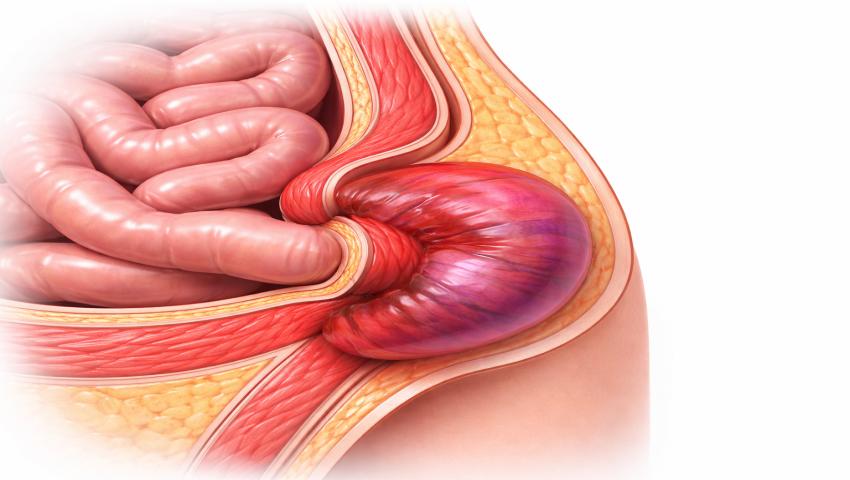
A hernia occurs when an internal organ or tissue pushes through a weak spot in the surrounding muscle. In many cases, the hernia bulge can move back into the abdomen when you lie down or press it gently.

However, an obstructed hernia occurs when a part of the intestine becomes trapped inside the hernia sac and cannot return to its normal position. This leads to a blockage in the intestine.

Key points:

  • The intestine becomes stuck inside the hernia sac.
  • The normal movement of food through the intestine gets blocked.
  • It may cause severe abdominal symptoms.
  • If untreated, it can progress to a strangulated hernia, where the blood supply to the intestine is cut off.

This condition requires urgent medical attention.

Common Warning Signs of an Obstructed Hernia:

Recognizing the symptoms early can help prevent serious complications.

  • Persistent Pain in the Hernia Area: One of the earliest signs is continuous pain around the hernia bulge. The pain may increase when standing, coughing, or lifting objects.
  • A Bulge That Cannot Be Pushed Back: In a normal hernia, the swelling may go back when lying down. In an obstructed hernia, the lump becomes hard and difficult to push back.
  • Nausea and Vomiting: When the intestine is blocked, patients may experience nausea or repeated vomiting.
  • Abdominal Swelling and Bloating: The stomach may feel swollen due to the blockage inside the intestine.
  • Constipation or Difficulty Passing Gas: An obstructed hernia can stop the normal movement of the bowel, leading to constipation or inability to pass gas.
  • Redness or Tenderness Around the Bulge: The skin over the hernia may become red, swollen, or extremely painful.

If you notice any of these symptoms, seek medical help immediately.

What Causes an Obstructed Hernia?

Many factors can increase pressure inside the abdomen and lead to hernia complications.

Common causes include:

  • Heavy Lifting: Lifting heavy objects without proper support can weaken abdominal muscles.
  • Chronic Cough: Continuous coughing puts pressure on the abdominal wall.
  • Constipation: Straining during bowel movements can worsen hernias.
  • Obesity: Excess body weight increases pressure inside the abdomen.
  • Previous Surgery: Weakness in the abdominal wall after surgery can lead to hernias.

Over time, these factors can cause a simple hernia to become obstructed.

How Is an Obstructed Hernia Diagnosed?

Diagnosis usually begins with a physical examination.

When you visit Dr. N. Subrahmaneswara Babu, he will carefully evaluate the swelling and your symptoms.

Diagnosis may include:

  • Physical Examination: The doctor checks the bulge and may ask you to cough or strain to observe changes.
  • Ultrasound Scan: Helps identify trapped tissue inside the hernia.
  • CT Scan: Used in complicated cases to check the severity of the obstruction.

Early diagnosis helps prevent serious complications.

Why Obstructed Hernia Should Not Be Ignored?

Many people delay treatment because the swelling is small or painless in the beginning. However, ignoring a hernia can lead to dangerous complications.

  • Risk of Strangulated Hernia: If the trapped intestine loses its blood supply, it becomes a strangulated hernia, which can damage the intestine.
  • Severe Infection: Untreated obstruction can cause infection in the abdominal cavity.
  • Emergency Surgery: Delaying treatment increases the chance of emergency surgery and longer recovery.

Seeking timely treatment from the Best Hernia Specialist in Hyderabad can help avoid these risks.

Treatment Options for Obstructed Hernia:

Treatment depends on the severity of the condition. In most cases, surgery is required to repair the hernia and release the trapped intestine.

At Hills Gastro & Onco Care, advanced surgical techniques are used to ensure safe and effective treatment.

  • Open Hernia Surgery: A small incision is made over the hernia. The trapped tissue is returned to its normal position, and the muscle wall is repaired.
  • Laparoscopic Hernia Surgery: This is a minimally invasive method where small cuts are made in the abdomen. A camera and special instruments are used to repair the hernia and place a mesh to strengthen the weak area.

Patients needing Complex Hernia Treatment in Hyderabad often benefit from these advanced techniques, which help reduce pain and improve recovery.

An experienced Hernia Surgeon in Hyderabad can recommend the most suitable surgical approach depending on the patient’s condition.

Recovery After Hernia Surgery:

Modern hernia surgery allows faster recovery for most patients.

What to expect after surgery?

  • Hospital Stay: Usually discharged within 24 hours.
  • Pain: Mild discomfort around the incision site.
  • Return to Work: Many patients return to normal activities within a few days.
  • Lifestyle Care: Avoid heavy lifting during the recovery period.

Following the doctor’s advice helps ensure a smooth recovery.

When Should You See a Doctor?

You should consult a doctor immediately if you notice:

  • A painful lump in the abdomen or groin
  • Sudden increase in hernia size
  • Vomiting or nausea with abdominal pain
  • A bulge that cannot be pushed back
  • Redness or severe tenderness near the swelling

Early evaluation can prevent complications and emergency situations.

Key Takeaways:

An obstructed hernia is a serious condition that should never be ignored. Symptoms such as persistent pain, nausea, abdominal swelling, or a hard bulge may indicate that the intestine is trapped inside the hernia.

Early diagnosis and treatment can prevent life-threatening complications.

At Hills Gastro & Onco Care, Dr. N. Subrahmaneswara Babu, a highly experienced surgical gastroenterologist with 18 years of experience, provides expert care for different types of hernias using modern surgical techniques.

If you notice a hernia bulge or sudden abdominal pain, do not delay medical care. Early treatment can protect your health and prevent emergencies.

Stop ignoring the warning signs. Get expert evaluation today and take the first step toward safe recovery.

What is an Anal Spasm? All You Need to Know

Sudden pain around the anus can be frightening and uncomfortable. Many people experience a sharp, cramping pain in the rectum that appears suddenly and disappears after a few seconds or minutes. This condition is often caused by an anal spasm, a temporary tightening of the muscles around the anus.

Many patients ignore this symptom, assuming it is due to gas, constipation, or minor irritation. However, repeated anal muscle spasm episodes may indicate an underlying issue that needs medical attention.

At Hills Gastro & Onco Care, Dr. N. Subrahmaneswara Babu, a Best Surgical Gastroenterologist in Hyderabad, regularly evaluates patients who experience rectal pain, anal spasms, or discomfort during bowel movements. Early diagnosis helps identify the cause and prevent further complications.

Patients looking for a Proctologist in Hyderabad for problems related to rectal pain, piles, fissures, or anal spasms often seek expert evaluation to identify the exact cause of their symptoms.

This guide explains everything you should know about anal spasm, its causes, symptoms, and treatment options.

What is an Anal Spasm?

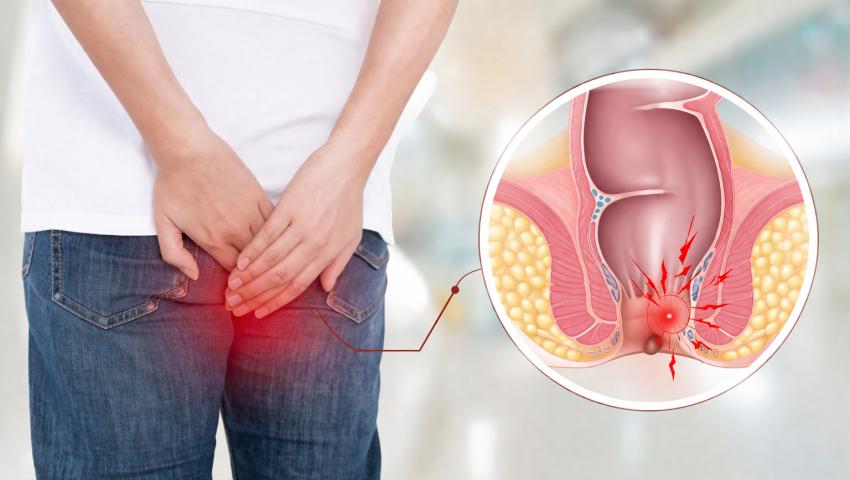
An anal spasm occurs when the muscles around the anus tighten suddenly and involuntarily. These muscles are called the anal sphincter muscles, and they play an important role in controlling bowel movements.

When these muscles contract suddenly, it may cause sharp pain or cramping in the rectum. The pain may last for a few seconds or sometimes several minutes before it goes away on its own.

In medical terms, this condition is sometimes related to anal sphincter spasm or a functional rectal pain disorder known as proctalgia fugax.

Key points to understand:

  • It involves the sudden tightening of the anal muscles
  • Pain usually appears suddenly and disappears quickly.
  • Episodes may occur during the day or at night.

In many cases, it is temporary but may recur.

Common Symptoms of Anal Spasm:

The symptoms can vary from person to person. Some people experience only mild discomfort, while others feel intense pain.

Common symptoms include:

  • Sudden Sharp Pain: A sudden stabbing or cramping pain in the anus or rectum.
  • Rectal Muscle Spasm: A tightening or cramping sensation around the anal area.
  • Pain After Passing Stool: Some patients experience spasms after bowel movements.
  • Anal Spasm at Night: Episodes may wake patients from sleep.
  • Difficulty Sitting: Sitting may become uncomfortable due to pain.
  • Tightness Around the Anus: A feeling of pressure or tightening in the anal muscles.

These symptoms may last from a few seconds to several minutes and then disappear.

What Causes Anal Spasm?

Many factors can trigger spasms in the anal muscles. Sometimes the exact cause is not clear, but several common conditions may contribute.

  • Anal Fissure: A small tear in the lining of the anus can cause severe pain and muscle tightening. Many patients consult a Fissure specialist in Hyderabad when fissures cause repeated spasms and discomfort during bowel movements.
  • Constipation: Hard stools and straining during bowel movements can irritate the anal muscles.
  • Hemorrhoids (Piles): Swollen veins around the anus can cause irritation and spasms. People experiencing bleeding, swelling, or discomfort often consult a Piles specialist for proper diagnosis and treatment.
  • Stress and Anxiety: Mental stress can sometimes trigger muscle spasms in different parts of the body, including the rectum.
  • Inflammation: Inflammation in the rectum due to infections or digestive conditions may also cause spasms.

Understanding the causes of anal spasm helps doctors recommend the right treatment.

Who Is More Likely to Experience Anal Spasm?

Certain individuals have a higher risk of developing anal sphincter spasm.

These include:

  • People with chronic constipation
  • Patients with anal fissures
  • Individuals with digestive disorders
  • People who frequently strain during bowel movements
  • Individuals experiencing high levels of stress

Maintaining good digestive health can reduce the risk of these spasms. Patients from nearby areas often visit a Piles specialist in Secunderabad for evaluation when rectal pain or anal discomfort becomes frequent.

How Is Anal Spasm Diagnosed?

If the pain occurs frequently, it is important to consult a specialist.

During your visit, the doctor may perform:

  • Medical History Review: Understanding your symptoms and bowel habits.
  • Physical Examination: Checking the anal area for fissures, swelling, or other problems.
  • Digital Rectal Examination: A simple exam to check the rectal muscles.
  • Additional Tests: In some cases, tests like proctoscopy or colonoscopy may be suggested to rule out other conditions.

Proper evaluation helps identify whether the pain is due to anal muscle spasm or another digestive condition.

Anal Spasm Treatment Options:

The treatment depends on the underlying cause and severity of the symptoms.

  • Warm Sitz Baths: Sitting in warm water for 10–15 minutes can relax the anal muscles and reduce pain.
  • Medications: Doctors may prescribe medicines that help relax the muscles and reduce discomfort.
  • Treating the Underlying Cause: If the spasm is caused by conditions like fissures or hemorrhoids, treating those conditions can provide relief.
  • Dietary Changes: Increasing fiber intake and drinking more water help prevent constipation, which reduces strain on the anal muscles.

Proper anal spasm treatment focuses on relieving symptoms and addressing the root cause.

Home Remedies for Anal Spasm Relief:

Some simple lifestyle changes may help reduce episodes of spasms.

Helpful tips include:

  • Eat fiber-rich foods like fruits and vegetables
  • Drink plenty of water.
  • Avoid straining during bowel movements.
  • Take warm sitz baths regularly.
  • Practice stress management techniques

These steps can help prevent repeated episodes.

When Should You See a Doctor?

While occasional spasms may not be serious, you should seek medical advice if:

  • The pain occurs frequently
  • The pain becomes severe or lasts longer.
  • There is bleeding during bowel movements.
  • You experience persistent rectal discomfort.

Early consultation helps identify the cause and prevent further complications.

At Hills Gastro & Onco Care, Dr. N. Subrahmaneswara Babu is a Piles specialist in Hyderabad who provides expert evaluation and treatment for conditions affecting the anus, rectum, and digestive system.

Key Takeaways:

An anal spasm is a sudden tightening of the muscles around the anus that can cause sharp rectal pain. While the condition is usually temporary, repeated episodes may indicate an underlying issue such as constipation, fissures, or hemorrhoids.

Understanding the symptoms and seeking medical advice early can help manage the condition effectively.

If you experience frequent rectal pain, anal spasms, or discomfort during bowel movements, it is important to consult a specialist for proper diagnosis and treatment.

Do not ignore persistent rectal pain. Early care can help protect your digestive health and improve your quality of life.

How to Know If It’s Piles or Fissure?

Are you suffering from unbearable pain or seeing blood in the toilet bowl? You are probably worried and asking yourself: “Is this piles or a fissure?” Rectal problems are common, but they are often misunderstood. Many people in India use the word “piles” for any discomfort in the anal region. However, piles (hemorrhoids) and anal fissures are two completely different conditions that require different treatments.

If you are looking for the Best Piles Surgeon in Hyderabad or want to know the difference between hemorrhoids or a fissure, this guide is for you.

Dr. N. Subrahmaneswara Babu, a leading Surgical Gastroenterologist at Apollo Hospital and founder of Hills Gastro & Onco Care, explains the clear signs so you can stop guessing and start healing.

What Are Piles (Hemorrhoids)?

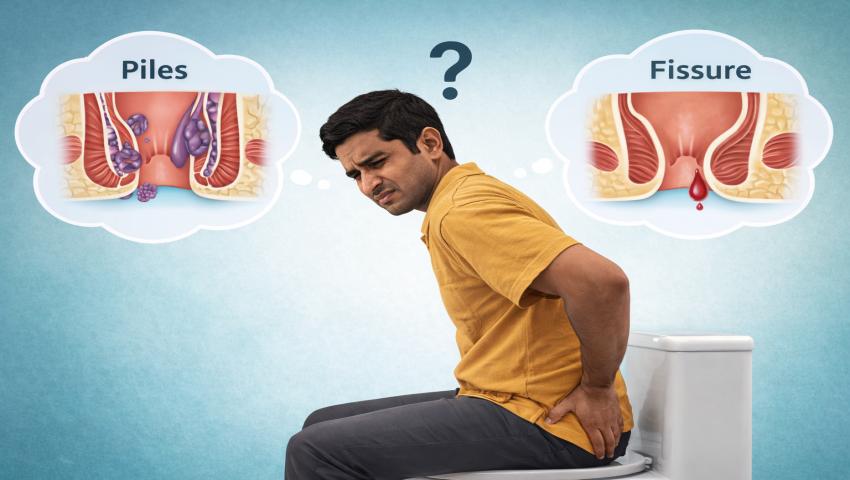
Piles, also called hemorrhoids, are swollen blood vessels in or around the anus and rectum. Many people search “piles what is” or “piles means what” because it is a very common problem in India.

Common causes of piles:
  • Chronic constipation
  • Straining during bowel movements
  • Sitting for long hours
  • Pregnancy
  • Low-fibre diet
Symptoms of piles:
  • Painless bleeding while passing stools
  • Blood drops in toilet or on tissue
  • Itching or irritation around the anus
  • A soft lump coming out during stools (in later stages)
  • Discomfort while sitting

In stage 1 piles, bleeding may be the only sign, without pain.

What Is an Anal Fissure?

An anal fissure is a small cut or tear in the anal lining. Many people search “what is fissure”, “define fissure”, or “fissure in ano meaning”.

A fissure usually happens due to passing hard stools or repeated constipation.

Symptoms of fissure:
  • Severe pain during and after bowel movement
  • Burning or tearing sensation
  • Bright red blood on toilet paper
  • Pain lasting for hours after stools
  • Fear of using the toilet due to pain

A fissure is usually very painful, unlike piles.

Piles vs Fissure – What's the Difference?

The confusion happens because both conditions cause bleeding and pain. However, the type of pain and timing differ.

This is why patients often search “hemorrhoids vs anal fissures” or “piles vs anal fissures”.

Piles or Fissure – How to Identify Based on Symptoms?

You may likely have piles if:
  • There is bleeding without pain
  • You feel a soft mass near the anus
  • Discomfort increases after sitting long hours
You may likely have a fissure if:
  • You feel sharp pain while passing stools
  • Pain continues for hours
  • You fear going to the toilet
  • Still confused? Only a doctor can confirm if it is piles or fissure.

Can Piles and Fissure Occur Together?

Yes. It is possible to have both piles and fissures at the same time. Chronic constipation is the root cause for both. Hard stool can tear the anal lining (fissure) and the straining pushes the veins out (piles). This is why searching for “hemorrhoids and fissure treatment” together is very common.

How Is Piles or Fissure Diagnosed by Dr. N. S Babu?

Self-diagnosis using Google images or searching “fissure kya hota hai” can be dangerous. Other serious conditions like fistulas or even rectal cancer can mimic these symptoms.

Dr. N. Subrahmaneswara Babu performs a gentle examination:

  • Physical Inspection: Checking for visible external piles or skin tags.
  • Digital Rectal Exam (DRE): To feel for internal abnormalities.
  • Proctoscopy: A small tube with a light is used to see inside the anal canal. This confirms if it is stage 1 piles, a deep fissure, or something else.

Dr. N. Subrahmaneswara Babu, an experienced Fissure Specialist in Hyderabad, ensures diagnosis is done gently and with privacy.

Piles vs Fissure Treatment Options at Hills Gastro & Onco Care:

Whether you need Anal Fissure Treatment in Hyderabad or Piles Treatment in Hyderabad, Dr. N. S. Babu offers advanced, minimally invasive solutions.

Treating Anal Fissures (The "Cut"):

1. Acute Fissures: 90% heal with medicines. We prescribe stool softeners, ointments (like Nifedipine/Diltiazem), and warm sitz baths.

2. Chronic Fissure Treatment: If the cut is deep and old, surgery may be needed.

    • LIS (Lateral Internal Sphincterotomy): A minor cut to relax the tight muscle.
    • Laser Treatment for Anal Fissure: Uses laser energy to heal the fissure without cutting.
Treating Piles (The "Lump"):

1. Early Stages (Grade 1-2): Lifestyle changes, fiber diet, and medications.

2. Advanced Stages (Grade 3-4):

    • Laser Piles Surgery in Hyderabad: The most popular painless piles treatment. A laser beam shrinks the hemorrhoid instantly. No cuts, no stitches, discharge in 24 hours.
    • Stapler Surgery: For large prolapsed piles.

When Should You See a Doctor for Piles or Fissure?

Do not let embarrassment stop you. Visit a Fissure Specialist in Hyderabad if:

  • You have bleeding during bowel movements.
  • The pain is so bad you are afraid to go to the toilet.
  • You feel a lump that doesn’t go back in.
  • You have been using over-the-counter creams for 2 weeks with no relief.

Searching for “Best doctor for Fissure treatment in Hyderabad” early can save you from surgery.

What Happens If Piles or Fissure Is Left Untreated?

  • Untreated Fissure: Can become a Chronic Fissure (deep ulcer) or lead to an Anal Fistula (an infected tunnel), which is much harder to treat.
  • Untreated Piles: Can lead to severe anemia (blood loss), strangulation (blood supply cut off), or gangrene.

How to Prevent Piles and Anal Fissure?

Prevention is always better than cure. To avoid fisher problem and piles:

  • Eat Fiber: Add fruits, vegetables, and leafy greens to soften stools.
  • Hydrate: Drink 3-4 liters of water daily.
  • Don’t Strain: Avoid sitting on the toilet for long periods (no phone scrolling!).
  • Treat Constipation: If you are constipated, take a laxative prescribed by your doctor.

Conclusion:

Knowing the difference between piles or fissure is the first step toward relief. While piles are “swollen veins” and fissures are “painful cuts,” both need expert care to heal permanently.

Stop suffering in silence. Dr. N. Subrahmaneswara Babu is a trusted Gastroenterologist in Hyderabad known for his compassionate care and high success rates with Laser Piles Treatment.

Ready to live pain-free? Don’t guess if it’s fishers in piles or something else. Get a confirmed diagnosis today. Book a hemorrhoids or a fissure Appointment in Hyderabad Dr. N. Subrahmaneswara Babu(Expert Proctologist & Laser Surgeon) call us at 94908 08080 Hills Gastro & Onco Care, Hyderabad, Telangana.

Laparoscopic Hernia Surgery vs Open Surgery: Which Is Better?

If you or your family member has been diagnosed with a hernia, one common question is: Laparoscopic hernia surgery vs open surgery – which is better? With modern medical advances, patients today have safer and more comfortable options for hernia treatment in Hyderabad. Choosing the right method depends on the type of hernia, your health condition, and the surgeon’s expertise.

At Hills Gastro & Onco Care, patients receive advanced hernia treatment under the guidance of Dr. N. Subrahmaneswara Babu, a leading hernia specialist in Hyderabad with 18+ years of experience and expertise in both open and laparoscopic hernia surgery. This guide explains the differences in simple words to help you make the right decision.

What Is Hernia Surgery?

A hernia happens when an internal organ or tissue pushes through a weak area in the muscle wall. Common types include inguinal, umbilical, incisional, femoral, and hiatal hernias.

Hernias do not heal on their own. Over time, they may increase in size and cause pain or serious complications. Surgery is the only permanent treatment.

Patients searching for a hernia hospital near me or hernia treatment in Hyderabad usually want safe surgery, quick recovery, and minimal pain.

What Is Laparoscopic Hernia Surgery?

Laparoscopic hernia surgery is also known as “Keyhole Surgery” or “Minimally Invasive Hernia Surgery.” It is a modern method where large cuts are avoided.

How Laparoscopic Hernia Surgery Is Performed?

In this method, the surgeon makes 3 to 4 tiny holes (about 0.5 cm to 1 cm) in your abdomen. A special camera (laparoscope) is inserted so the doctor can see inside on a TV screen. Long, thin instruments are used to fix the hernia and place a mesh from the inside.

Types of Hernias Treated with Laparoscopy:

This method is excellent for:

Advantages of Laparoscopic Hernia Surgery:

  • Less Pain: Because the cuts are tiny, it is often called painless hernia treatment.
  • Faster Recovery: You can walk on the same day.
  • Small Scars: Cosmetically better results.
  • Quick Return to Work: Best for office goers and IT professionals.

What Is Open Hernia Surgery?

Open hernia surgery is the traditional way of fixing hernias. It has been used for many years and is still very effective in specific situations.

How Open Hernia Surgery Is Done?

The surgeon makes a single larger cut (incision) directly over the hernia bulge (about 3 to 4 inches). The protruding organ is pushed back, and the muscle wall is stitched or reinforced with a mesh.

When Open Hernia Surgery Is Recommended?

While laparoscopy is popular, open surgery is better for:

  • Large or Complicated Hernias: If the hernia is huge, open surgery gives the doctor better access.
  • Emergency Cases: If the intestine is stuck or rotting (strangulated hernia), open surgery allows the doctor to remove the damaged part safely.
  • Patients who cannot undergo General Anesthesia: Open surgery can be done under local anesthesia (numbing only that area).

Advantages of Open Hernia Surgery:

  • Can be done under local anesthesia.
  • Suitable for patients with severe heart or lung issues who cannot tolerate the gas used in laparoscopy.
  • Slightly lower cost in smaller nursing homes (though overall costs vary).

Laparoscopic Hernia Surgery vs Open Hernia Surgery – Key Differences

Procedure Comparison:
  • Surgical approach: Laparoscopic surgery uses small cuts; open surgery uses a single large cut.
  • Anaesthesia: Laparoscopy usually needs general anaesthesia, while open surgery may use spinal or local anaesthesia.
Pain, Recovery & Hospital Stay:

Laparoscopic surgery causes less pain and faster recovery. Most patients go home within 24 hours. Open surgery may need a longer hospital stay and rest.

Scarring & Cosmetic Outcome:

Laparoscopic surgery leaves very small scars. Open surgery results in a visible scar.

Risk of Infection & Complications:

The risk of infection is lower with laparoscopic surgery due to smaller wounds.

Hernia Recurrence Rates:

With experienced surgeons like Dr. N. Subrahmaneswara Babu, both methods have low recurrence rates. A surgeon’s skill matters more than the technique.

Which Is Better – Laparoscopic or Open Hernia Surgery?

There is no single “best” answer. It depends on your body and lifestyle.

  • Best Option for Working Professionals: If you have a desk job or work in IT in Hitech City or Gachibowli, laparoscopic hernia surgery is usually better. You can return to work in 5 to 7 days.
  • Best Choice for Elderly Patients: For older patients with heart problems, Open Surgery under local anesthesia might be safer because general anesthesia (required for laparoscopy) can be risky for them.
  • Best Surgery for Recurrent Hernia: If you had open surgery before and the hernia came back, laparoscopic repair is the gold standard. It allows the surgeon to work on a fresh tissue plane, avoiding old scars.
  • Surgeon Expertise & Patient Factors: The success of the surgery depends heavily on the surgeon’s skill. You need a specialist who is an expert in both. Dr. N. Subrahmaneswara Babu, with 18+ years of experience, evaluates every patient individually at Hills Gastro & Onco Care to decide the safest approach.

Recovery After Laparoscopic vs Open Hernia Surgery:

Recovery is the main concern for most patients.

Recovery Time Comparison:
  • Laparoscopic: You feel normal within 1 week. Heavy lifting can be resumed after 3-4 weeks.
  • Open: You may feel soreness for 2 weeks. Heavy lifting should be avoided for 6 weeks.
Return to Work & Normal Activities:
  • Driving: You can drive after 3-5 days with laparoscopy, compared to 10-14 days with open surgery.
  • Office Work: Laparoscopic patients often login to work from home within 3 days.
Post-Surgery Care & Lifestyle Tips:
  • Eat a high-fiber diet to avoid constipation.
  • Walk daily to improve blood flow.
  • Avoid lifting heavy weights (buckets, gas cylinders) strictly for the first month.

Cost Comparison – Laparoscopic Hernia Surgery Vs Open Surgery:

Many patients ask about the hernia surgery cost in Hyderabad.

Cost of Laparoscopic Hernia Surgery:

Laparoscopic surgery usually costs slightly more than open surgery. This is because it uses specialized technology (camera systems) and tackers to fix the mesh. However, since the hospital stay is shorter and you get back to work faster, many find it financially worth it.

Cost of Open Hernia Surgery:

The surgical equipment cost is lower for open surgery. However, if you stay in the hospital longer due to pain, the room charges might balance out the difference.

Factors Affecting Hernia Surgery Cost:
  • Type of Mesh: Standard vs. Advanced lightweight mesh.
  • Hospital Choice: Best hospitals for hernia surgery in Hyderabad, like Apollo or specialized clinics like Hills Gastro & Onco Care, offer different packages.
  • Insurance: Most health insurance policies cover both surgeries.

Risks & Complications of Both Procedures:

Every surgery has some risk, but hernia surgery is generally very safe.

Common Surgical Risks:
  • Open: Wound infection, blood collection (hematoma).
  • Laparoscopic: Injury to nearby organs (very rare with experts), shoulder pain due to gas (resolves in 24 hours).
How Modern Techniques Reduce Complications?

Experienced surgeons use advanced 3D mesh and precise techniques to ensure the repair is tension-free. This significantly drops the complication rate.

When Should You Consult a Hernia Specialist?

Do not wait for the pain to become unbearable.

Warning Signs You Should Not Ignore:
  • Painful bulge in the abdomen or groin
  • Pain while lifting or coughing
  • Nausea or vomiting
  • Hernia is not going back inside
Importance of Early Diagnosis & Treatment

Early treatment prevents emergency surgery and complications.

Consult Hernia Specialist Dr. N. Subrahmaneswara Babu:

If you are looking for the Best hernia surgeon in Hyderabad, consider consulting Dr. N. Subrahmaneswara Babu.

With over 18 years of experience, Dr. N. S. Babu is a leading Surgical Gastroenterologist in Hyderabad. He serves as the Director of Hills Gastro & Onco Care and is a Consultant at Apollo Hospitals. He is an expert in both laparoscopic hernia surgery vs open hernia surgery and has treated thousands of patients successfully.

Why Choose Dr. N. Subrahmaneswara Babu?

Don’t live with hernia pain. Get the best treatment call us 94908 08080 today.

How to Cure Chronic Constipation Permanently: Proven Methods & Home Remedies?

Chronic constipation is a troubling digestive issue that affects many people across India, especially those with busy lifestyles and irregular eating habits. It becomes a concern when you pass stools less than three times a week, face hard stools, struggle with straining, or feel your stomach never empties fully. If you are searching for how to cure chronic constipation permanently, the right approach can make a big difference.

Most cases improve with a proper constipation diet plan, healthy habits, and simple natural remedies for constipation. In this guide, you’ll learn proven ways to relieve constipation fast, long-term solutions to prevent it from returning, and when to seek expert care—especially if you need constipation treatment in Hyderabad from a specialist like Dr. N. Subrahmaneswara Babu at Hills Gastro & Onco Care.

What Is Chronic Constipation?

Chronic constipation means difficulty passing stool for more than 12 weeks. Common symptoms include:

  • Hard, dry, or lumpy stools
  • Straining for long periods
  • Bloating, heaviness, and gas
  • Feeling of incomplete evacuation
  • Pain during bowel movements

It affects students, IT employees, homemakers, and elderly people equally—especially with today’s sedentary lifestyle and low-fiber diets.

Can You Cure Chronic Constipation Permanently?

Yes—most people can cure chronic constipation permanently with a combination of:

  • Diet changes
  • Hydration
  • Regular physical activity
  • Stress management
  • Treating underlying medical conditions

For stubborn cases, a gastroenterologist can identify deeper causes and guide advanced treatment. At Hills Gastro & Onco Care, Dr. N. Subrahmaneswara Babu offers comprehensive constipation treatment in Hyderabad, helping patients achieve long-term relief.

Proven Medical Methods to Cure Chronic Constipation Permanently:

If your constipation persists despite home remedies, a medical evaluation is necessary.

  • Osmotic Laxatives (Safe for Long-Term Use): Such as PEG, lactulose—draw water into the colon and soften stools.
  • Fiber Supplements: Psyllium husk (Isabgol) adds bulk and regulates stools.
  • Prescription Medicines: A gastroenterologist may prescribe:
    1. Prucalopride
    2. Linaclotide
    3. Lubiprostone

These help the intestines move stool more effectively.

  • Biofeedback Therapy: For people with pelvic floor dysfunction.
  • Surgery (Rare): Only when severe bowel obstruction, rectocele, or colon inertia is diagnosed.

Dr. N. S. Babu, known as the Best GI Surgeon in Hyderabad, evaluates surgical needs only when absolutely required.

Best Home Remedies to Cure Chronic Constipation Naturally:

These remedies are safe, simple, and effective for daily use.

  • Warm Water + Lemon in the Morning: Kickstarts bowel movement.
  • Milk with Ghee (Night Routine): A traditional Indian remedy that lubricates the gut.
  • Isabgol (Psyllium Husk): Softens stool; works within 8–12 hours.
  • Triphala Powder: Ayurvedic formula for long-term bowel health.
  • Ginger Tea: Activates your digestive muscles.
  • Fennel Seed Water (Saunf Water): Reduces bloating and supports smooth digestion.

Diet Plan to Cure Chronic Constipation Permanently:

A long-lasting constipation cure starts with your diet.

Foods to Eat:

  • Oats, dalia, brown rice
  • Apples, papaya, pears, berries
  • Prunes, figs, dates
  • Palak, broccoli, lauki, carrots
  • Whole wheat chapati / multigrain atta
  • Beans, lentils, rajma, chana
  • Chia seeds, flax seeds

Foods to Avoid:

  • Maida-based foods (white bread, bakery items)
  • Excess dairy
  • Red meat
  • Packed snacks
  • Fried and oily items
  • Very ripe bananas (can worsen constipation)

Lifestyle Changes That Prevent Constipation Forever:

These small habits bring big results.

  • Walk 30 Minutes Daily: Movement stimulates your intestines.
  • Follow a Fixed Toilet Routine: Go at the same time daily—preferably after breakfast.
  • Use the Squatting Position: Improves stool passage. Use a footstool if you have a Western toilet.
  • Drink 2.5–3 Litres of Water Daily: Hydration softens stool naturally.
  • Reduce Stress: Meditation and deep breathing relax your digestive system.

When Chronic Constipation Is a Sign of an Underlying Condition?

You may need medical attention if constipation is caused by:

  • IBS
  • Thyroid imbalance
  • Diabetes
  • Colon polyps
  • Pelvic floor dysfunction
  • Medication side effects

A gastroenterologist in Hyderabad, Dr. N. S. Babu, will diagnose and treat the root cause—not just the symptoms.

When to See a Doctor for Chronic Constipation?

Consult a constipation specialist doctor if you experience:

  • Constipation for more than 3 weeks
  • Blood in stools
  • Severe abdominal pain or vomiting
  • Unexplained weight loss
  • Constipation affects daily life
  • Need to use laxatives daily

If you’re in Hyderabad, Secunderabad, or Kompally, visit Hills Gastro & Onco Care, known for trusted constipation treatment in Hyderabad.

Meet the Expert – Dr. N. Subrahmaneswara Babu:

Director, Hills Gastro & Onco Care Consultant, Surgical Gastroenterologist – Apollo Hospital 18+ Years Experience 10,000+ Successful Procedures.

Dr. N. Subrahmaneswara Babu is recognised as one of the Best Surgical Gastroenterologists in Hyderabad. He specialises in treating chronic constipation, IBS, anal fissures, piles, and complex GI disorders.

Patients trust him for:

  • Advanced diagnostic methods
  • Honest medical guidance
  • Minimal medicine approach where possible
  • Patient-first treatment plans

Searches like gastroenterologist near me, constipation hospital near me, and constipation treatment near me often lead patients to Hills Gastro & Onco Care because of its reputation for ethical and effective care.

Conclusion: Permanent Relief From Chronic Constipation Is Possible

Permanent relief from chronic constipation is absolutely achievable when you follow the right combination of healthy habits, including a fibre-rich diet, proper hydration, regular activity, and stress-free toilet routines. These simple changes strengthen your digestion and help your bowels function naturally over time. But if your symptoms continue for weeks or become painful, it is important not to ignore them, as long-standing constipation can lead to piles, fissures, or other serious gut issues.

For specialised care and accurate diagnosis, you can consult Dr. N. Subrahmaneswara Babu, a leading gastroenterologist offering advanced constipation treatment in Hyderabad at Hills Gastro & Onco Care. If you need personalised guidance or a permanent solution, call 94908 08080 to book your appointment and take the first step toward long-lasting relief.