
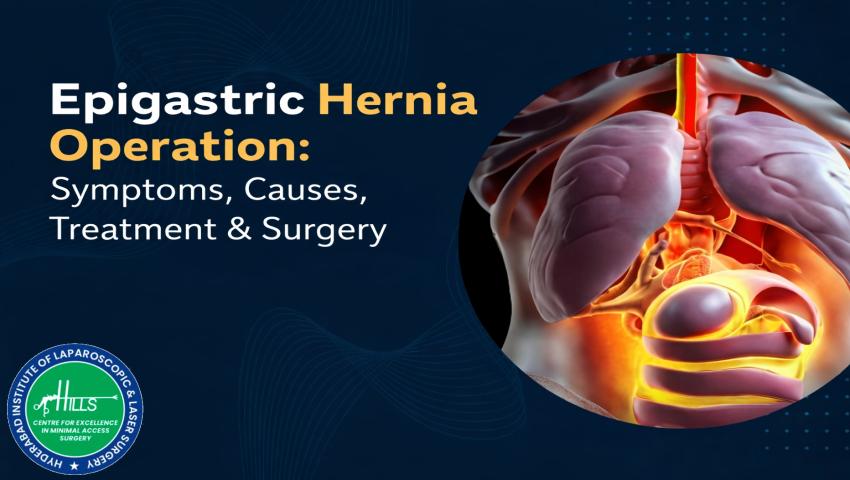
A small lump or bulge in the upper stomach area, especially above the belly button, can be worrying. Many people ignore it, thinking it is gas, fat, or muscle strain. But in some cases, it may be an epigastric hernia, a common yet often misunderstood condition.
An epigastric hernia develops in the epigastric region, which is the area between the chest bone (xiphoid process) and the navel. Early diagnosis and the right epigastric hernia operation can prevent pain, complications, and future emergencies.
At Hills Gastro & Onco Care, Dr. N. Subrahmaneswara Babu, a Best Surgical Gastroenterologist in Hyderabad, offers advanced and safe epigastric hernia surgery in Hyderabad using modern laparoscopic techniques.
This guide explains everything about epigastric hernia surgery, symptoms, and why you should not delay treatment.
What Is an Epigastric Hernia?
An epigastric hernia occurs in the epigastric region of the abdominal wall. This area is located between your navel (belly button) and the bottom of your rib cage (breastbone or xiphoid process).
It happens when there is a gap or weakness in the muscles known as the linea alba. The linea alba is the connective tissue that runs down the middle of your abdomen. When this tissue weakens, fat (called omental fat) or rarely, the intestine, pushes through the small holes in wall of the muscle.
Key points:
- It usually appears as a lump on stomach in the center.
- It is often caused by the herniation of omental fat.
- It is different from an umbilical hernia (which is at the belly button).
What Are the Symptoms of Epigastric Hernia?
Some people have no symptoms at all (asymptomatic). However, most patients visit Hills Gastro & Onco Care complaining of:
- Visible Lump: A noticeable lump inside stomach or bulging upper stomach that feels soft to touch.
- Pain: You may feel pain above belly button or tenderness in the epigastric area. This pain often worsens after eating.
- Discomfort: A feeling of epigastric discomfort or pressure, especially when lifting heavy objects, coughing, or straining on the toilet.
- Worsens with Activity: The bulging stomach gets bigger when you stand up or do sit-ups.
- Pinched Feeling: If the fat gets stuck, you might feel a sharp pain.
Note for Women: Sometimes, this pain is mistaken for other issues. If you have pain in upper stomach under breasts or notice a protruding belly button, get a check-up.
What Causes an Epigastric Hernia?
You might wonder, “How is a hernia caused?” It is usually a result of pressure on the abdominal wall pushing through a weak spot. Common causes include:
- Heavy Lifting: Lifting heavy weights without proper support.
- Pregnancy: The growing baby puts pressure on the linea alba abdomen.
- Obesity: Excess weight stretches the abdominal muscles (upper belly fat).
- Chronic Coughing: Frequent coughing puts strain on the stomach.
- Straining: Pushing hard during bowel movements (constipation).
Unlike other conditions, you cannot fix this with medicine. A hernia medicine name does not exist to close the hole; only surgery can fix it.
How Is an Epigastric Hernia Diagnosed?
When you visit Dr. N. Subrahmaneswara Babu, the diagnosis is usually quick and simple.
- Physical Exam: The doctor will ask you to stand and cough. He may perform a belly press test to feel the lump in abdomen.
- CT Scan or Ultrasound: If the patient is obese or the lump is small, a CT scan of upper abdomen or ultrasound helps confirm the diagnosis and check if any intestine is trapped (incarcerated hernia).
Do All Epigastric Hernias Need Surgery?
Many patients ask, “Is epigastric hernia dangerous?” or “Can I leave it alone?” In adults, epigastric hernias do not go away on their own. While small ones might not cause pain initially, they tend to get bigger over time.
The Major Risk: Strangulation If the tissue pushing through the hole gets stuck and its blood supply is cut off, it is called a strangulated hernia. This causes severe abdominal pain and vomiting and requires emergency Epigastric Hernia Surgery in Hyderabad.
Dr. Babu’s Advice: It is better to plan a simple surgery now than face an emergency later.
Epigastric Hernia Operation Treatment Options at Hills Gastro & Onco Care:
Dr. N. Subrahmaneswara Babu is an expert in Hernia Surgery in Hyderabad, offering both open and advanced laparoscopic (laser/keyhole) surgeries.
1. Open Hernia Repair:
For very small hernias, the surgeon makes a small incision over the hernia sac. The fat is pushed back in, and the muscle wall is stitched closed. This is often a day-care procedure.
2. Laparoscopic (Keyhole) Hernia Repair:
This is the preferred method for larger hernias or patients with higher BMI.
- Small cuts (tiny holes) are made.
- A camera is inserted to see the hole in the stomach wall.
- A mesh (synthetic patch) is placed to strengthen the weak area. This prevents the hernia from coming back (Recurrent Hernia).
Dr. N. S. Babu has 18+ years of experience treating Umbilical, Incisional, and Femoral Hernia Treatment in Hyderabad. His precise surgical techniques ensure minimal pain and faster recovery.
What to Expect Before and After Epigastric Hernia Surgery?
Before Surgery:
- Routine blood tests and fitness check.
- You will be asked to stop smoking, as it delays healing.
- Fasting for 6-8 hours before the operation.
After Surgery:
- Hospital Stay: Usually discharged within 24 hours.
- Pain: Mild pain in the incision area, managed with painkillers.
- Recovery: Most patients return to desk jobs in 3-5 days.
- Support: You may be advised to wear an abdominal belt for a few weeks to support the muscles.
Risks and Complications of Epigastric Hernia Surgery:
Modern hernia surgery is very safe. However, minor risks include:
- Infection at the stitch site.
- Seroma (fluid collection under the skin).
- Recurrence (hernia coming back) – this is very rare when mesh repair is used by an expert Hernia Specialist in Hyderabad.
When Should You Consult a Hernia Surgeon?
Do not wait until the pain becomes unbearable. Book an appointment Dr. N. S. Babu if:
- The lump on stomach becomes painful or turns red/purple.
- You have nausea or vomiting along with the pain.
- You cannot push the lump back in.
- You have sudden, sharp pain in the upper stomach.
Epigastric Hernia Operation – Key Takeaways:
An epigastric hernia is a common condition caused by a gap in the linea alba. While a small lump on stomach might seem harmless, it can lead to complications if untreated.
Dr. N. Subrahmaneswara Babu ensures that your treatment for epigastric hernia in Hyderabad is safe, effective, and minimally invasive. Whether it is a simple repair or complex abdominal wall reconstruction, you are in expert hands.
Stop worrying about the lump. Get it checked today. Book Your Appointment Today Dr. N. Subrahmaneswara Babu Call us at 94908 08080 Hills Gastro & Onco Care / Consultant at Apollo Hospital.